



That Light Just Came On: What Your Chevy Is Trying to Tell You
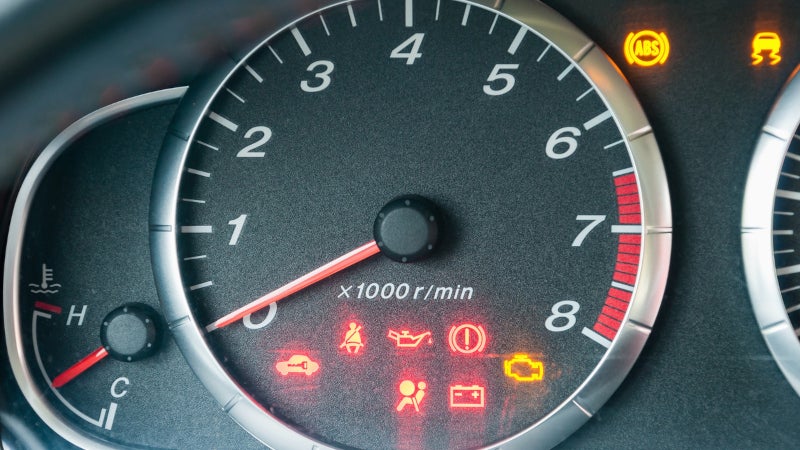
You're heading down Route 12 on a cold morning when a new light blinks on your dash. Maybe it's orange. Maybe it's red. Either way, your stomach drops.
Here's the good news: most dashboard lights aren't emergencies, and the few that are tell you so by their color. Let's walk through how to read them, which ones mean pull over now, and which ones can wait until you can call us.
Start with the color
Think of your dash like a traffic light. Red means stop when it's safe. Amber (yellow or orange) means plan to get it checked soon. Green or blue just means a feature is on, like your high beams.
One more thing before you panic: when you start your Chevy, a lot of lights flash on for a moment. That's a bulb check, and it's normal. The ones to watch are the lights that come on, or stay on, while you're driving.
The rule of thumb: red means stop, amber means schedule, green means relax.
The lights that mean pull over
If one of these comes on, find a safe place to stop. Don't try to "make it home."
- Oil pressure. This is the red oil can, or a message that says Oil Pressure Low/Stop Engine. Chevrolet says to safely bring the vehicle to a stop, because running with low oil pressure can damage the engine. When it's safe, check the oil level (your owner's manual shows how). If the light stays on, don't keep driving.
- Engine temperature. If the temperature gauge climbs into the red or you get an overheating warning, pull over, shut the engine off and let it cool. Never open the coolant cap while the engine is hot.
- Brake system. Sometimes it's just the parking brake. Make sure it's fully released. If the light stays on, or the pedal feels soft, stop when it's safe and call us. Brakes shouldn't wait.
- Charging system. The battery icon means your vehicle isn't keeping its battery charged. It may be running on battery power alone and could stop. Turn off extras like heated seats and get to a safe place.
- A flashing check engine light. A steady light is one thing. A flashing one is more serious. Chevrolet's manual says to reduce your speed and avoid hard acceleration. If it keeps flashing, find a safe place to stop, turn the vehicle off for at least 10 seconds and restart it. If it's still flashing, see your dealer as soon as possible.
The lights you can schedule (but shouldn't forget)
Amber lights are your Chevy's way of saying, "Look at me soon." They usually aren't emergencies, but they rarely fix themselves.
- A steady check engine light. Your vehicle's on-board diagnostic system has found a problem. Chevrolet notes the system often flags a malfunction before you notice anything wrong. Try tightening the gas cap, then schedule a visit. Skip long trips and heavy loads until it's checked.
- Tire pressure. The horseshoe with an exclamation point means one or more tires is low. Check all four and add air to the pressure on the label inside the driver's door. If the light flashes and then stays on, the monitoring system itself may need service.
- StabiliTrak or traction control. If it blinks while you're driving on a slick road, it's working, so ease off the gas. If it stays on, schedule a visit.
- ABS. Your regular brakes should still work, but you won't have anti-lock help in a hard stop. Drive carefully and schedule a visit.
- Change Engine Oil Soon. This one comes from your Oil Life System and isn't an emergency. Chevrolet says to service the vehicle as soon as possible, within the next 600 miles. It isn't the same as the oil pressure warning, and it doesn't tell you the oil level.
- Reduced Engine Power. Your vehicle is limiting power to protect itself. Get to a safe place and call us.
What to do in the first minute
- Note the color, and whether it's flashing. Red and flashing are the most urgent.
- If it's red, pull over when it's safe and turn the engine off.
- Check the easy stuff. Is the parking brake on? Is the gas cap tight? Are your tires low?
- Look it up in your owner's manual. Symbols and wording vary by model.
- Call us. Tell us the light, whether it flashes and how the vehicle feels. We'll help you decide whether to drive in or call for a tow.
A Fox Lake note: cold snaps and testing season
Lake County winters are hard on warning lights. Cold air shrinks tire pressure by about 1 psi for every 10°F, according to AAA, so the tire light often comes on after the first hard cold snap. AAA also says a battery loses about 35% of its strength at 32°F and about 60% at 0°F, which is why a weak battery often shows itself in winter. If yours is around three years old, ask us to test it.
There's one more reason not to ignore a check engine light here. Lake County is part of Illinois' vehicle emissions inspection area, and a lit light can keep a vehicle from passing the on-board diagnostics check. Find out why it's on before your test, not at it.
Keep this in your glove box
- Red light: pull over when it's safe.
- Flashing check engine light: slow down, and get it checked right away.
- Steady check engine light: schedule a visit soon.
- Tire light: check your tire pressure today.
- StabiliTrak blinking on ice: it's working.
- Reduced Engine Power: get to a safe place and call us.
Not sure what you're seeing? Call us.
Our GM-certified service team can find out what a light means and walk you through your options
before any work is done. We're at 39 N. Rte. 12 in Fox Lake. Service hours are Monday to
Thursday, 7:00 a.m. to 7:00 p.m., Friday, 7:00 a.m. to 6:00 p.m., and Saturday, 7:00 a.m. to 2:00
p.m. We're closed Sunday.
Warning lights and messages vary by model, trim and year, and some appear only on certain vehicles. This post is a general guide and isn't a diagnosis. For your exact vehicle, see your owner's manual or contact our service department.